due-diligence
investor-tips
Data Room
ai workflows
Stop Sending Static Data Rooms: Build an Investor Workspace That Answers Itself

Adhrita Nowrin
Dec 18, 2025
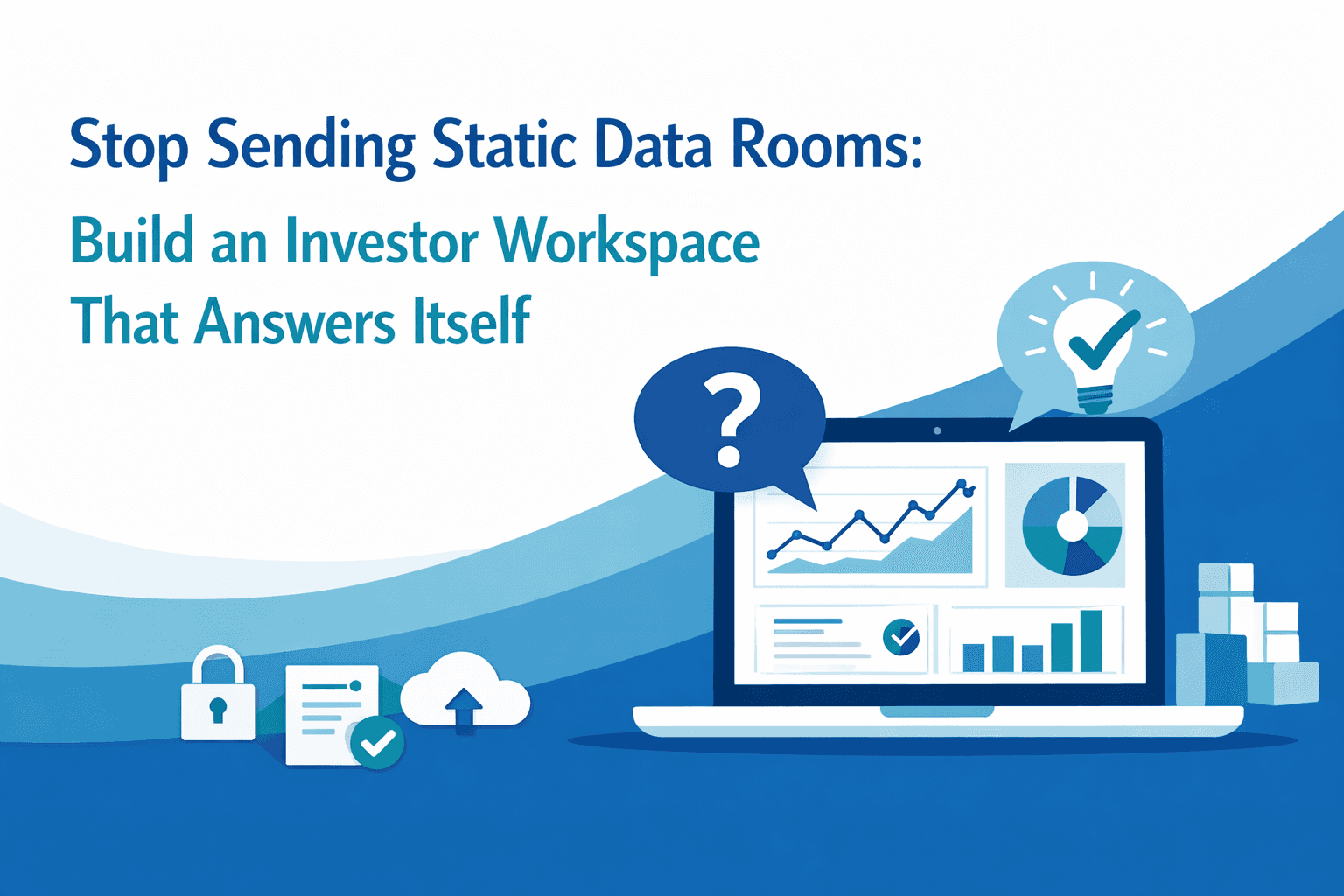
Static folders force investors to reconcile numbers; a dynamic workspace with a KPI dictionary, one data model, audit trails, and an AI query layer lets investors get verified answers in seconds.
Key facts:
The main friction for investors is inconsistent KPIs, no single source of truth, and slow clarification loops.
A modern workspace standardises definitions, connects to source systems, and exposes cohorts, payback, margin, and runway with lineage.
An AI layer should answer common diligence questions directly and link to the evidence behind every number.
askRIA’s agents provide queryable answers and references against a standardised schema.
Definitions and formulas:
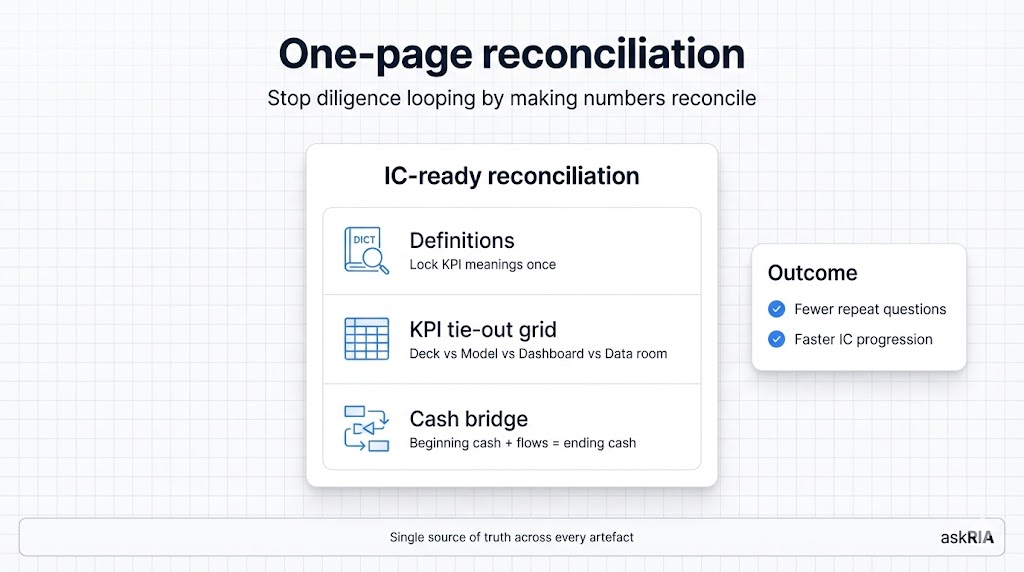
KPI dictionary: A glossary with stable metric IDs and exact formulas used across model, deck, and reports.
Single source of truth: One canonical data model that feeds all reports from the same definitions.
Runway (months): Bank balance ÷ monthly net burn, adjusted for committed capital timing.
CAC payback (months): Acquisition cost ÷ monthly gross profit from the acquired cohort.
Contribution margin: Revenue minus true variable costs to serve.
Static data rooms are still the norm: folder trees, versioned spreadsheets, and a dozen PDFs. They look complete, yet they slow investors because the numbers do not line up and questions take days to resolve.
Why static folders fail investors
Inconsistent KPIs: ARR, MRR, and bookings are defined differently in the deck, model, and update emails.
No single truth: Multiple models and CSV exports with hard-coded totals.
Slow clarification loops: Every simple question triggers a call, a new export, and more confusion.
What actually slows diligence on the investor side
Rebuilding runway because bank and burn do not tie out.
Guessing at cohort shape when there is no cohort view.
Hunting for cost to serve across cloud bills, support, and payments with no mapping to plans or SKUs.
Chasing definitions for basic ratios like CAC payback or NRR.
The investor workspace pattern
Replace the folder tree with a live workspace that has:
KPI dictionary and metric IDs so definitions are identical everywhere.
Canonical data model that powers all reports and the forecast.
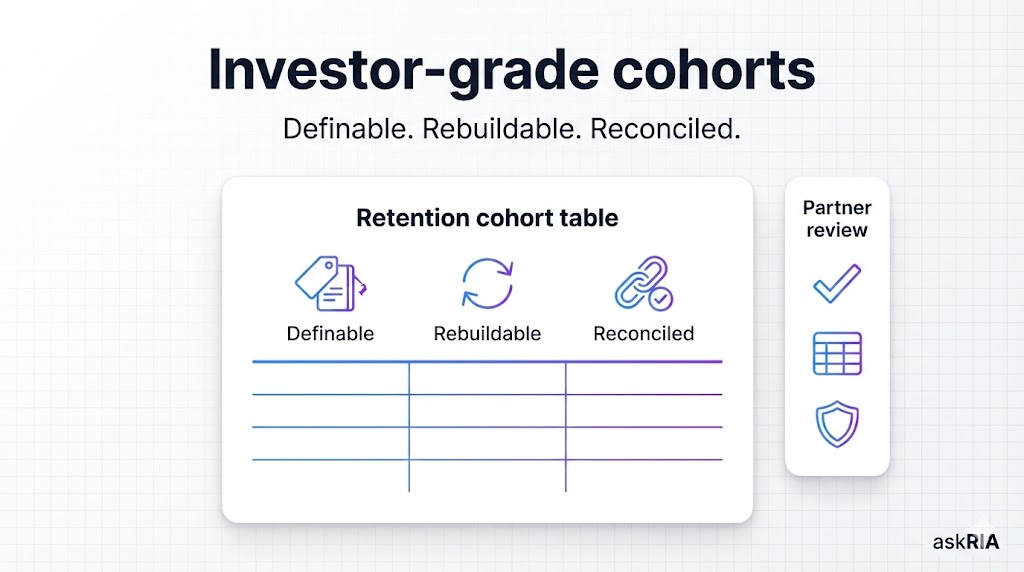
Cohorts and revenue quality views with active rate, expansion, and segment contrast.
Unit economics panels for CAC payback, contribution margin, and burn multiple.
Runway truth tied to bank, burn, and committed capital timing.
Lineage and audit trails linking each figure to bank, invoices, and contracts.
AI query layer that lets investors ask questions and get answers with links to evidence.
What investors should be able to ask and get answered
What is current runway and how does it reconcile to bank and burn.
What does cohort retention look like by segment and discount level.
What is CAC payback by channel in the last quarter.
Where does contribution margin break at higher usage.
Which risks are rising based on recent updates and actuals.
Quick set-up blueprint
Lock definitions: Publish a KPI dictionary and metric IDs.
Connect sources: Bank, billing or processor, CRM, support, cloud and data providers.
Model once: Create a canonical data model that feeds dashboards and the forecast.
Expose cohorts: Show start month, active rate, expansion, and promo flags.
Map costs to serve: Tie invoices to plans or SKUs, including moderation or data fees.
Runway tracker: Bank, burn, and committed capital with dates and assumptions.
Add agents: Enable an AI question layer that answers against the model and returns links to the underlying evidence.
Governance and access
Role-based access with read logs and export limits.
Versioned metric definitions and change notes.
Monthly close in 10 business days with automated tie-outs.
Red flags that mean you still have a static room
Multiple conflicting models for the same quarter.
KPIs without definitions.
No tie-out to bank, invoices, and contracts.
Manual exports without lineage or owners.
Where askRIA fits
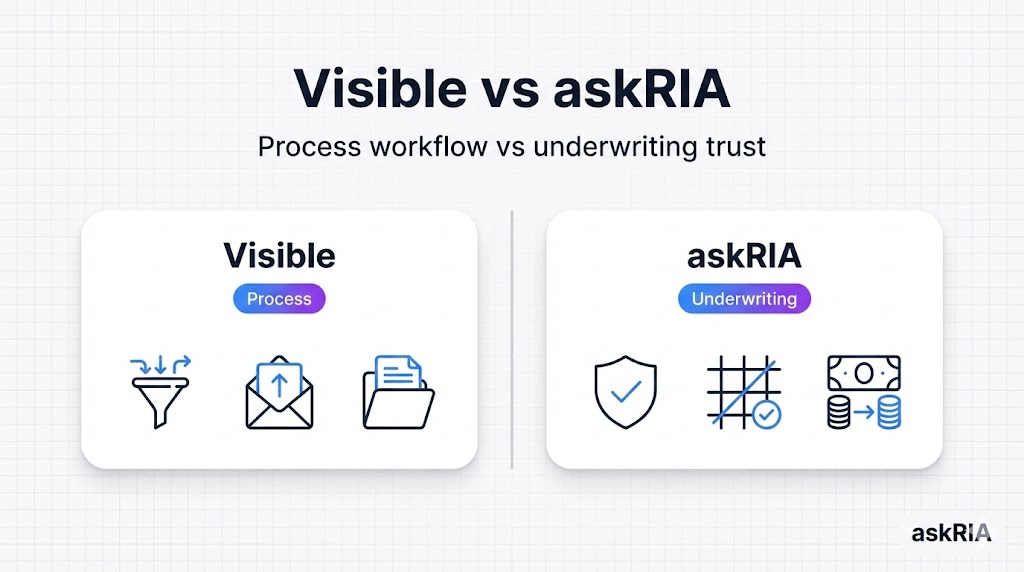
askRIA provides the agents and schema that make the workspace answer itself. Investors can query cohorts, payback, margin, and runway, and get links to the exact source behind the number. Founders spend less time exporting and more time running the business.
FAQs
1) Do we still need a classic folder for legal documents?
Yes. Keep legal files in a folder, but put operating numbers in a live workspace with definitions and lineage.
2) What if our data is messy today?
Start by locking definitions and wiring bank, billing, and CRM. Add cohorts and cost mapping next. You can layer agents once the model is stable.
3) How do investors validate answers from the AI layer?
Every answer should include a link to the underlying evidence and a timestamp. If it does not, treat the answer as unverified.
4) Can this replace board packs?
It should generate them. The same model should feed monthly updates and the board deck so definitions never drift.